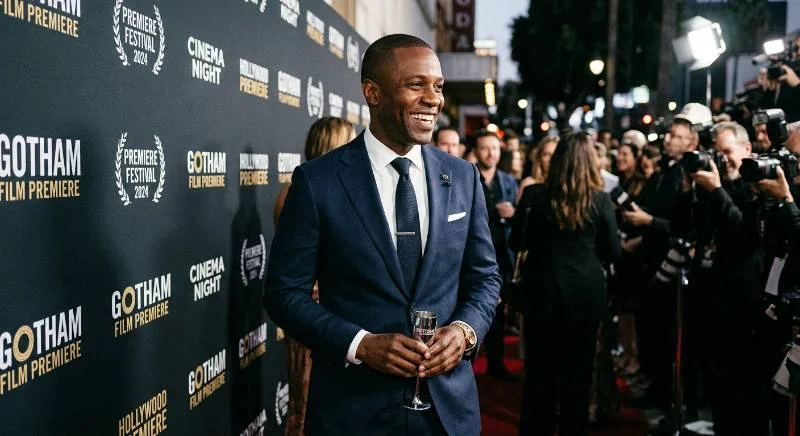
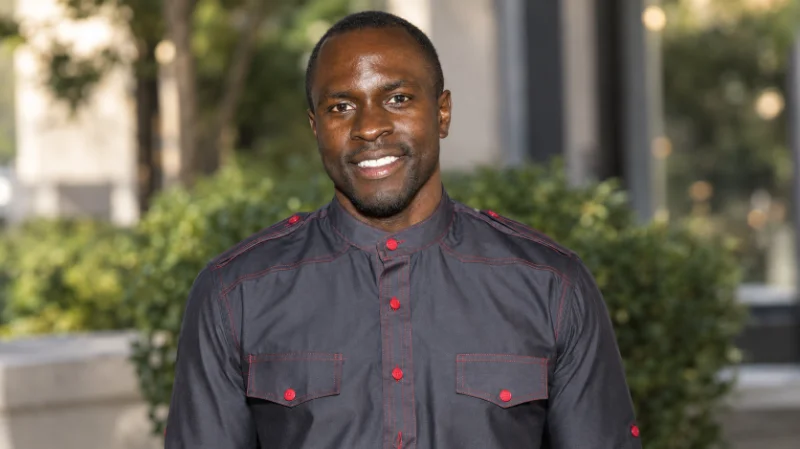
Gbenga Akinnagbe has spent more than two decades working across television, film, and theater, and most sources place his wealth somewhere between $1 million and $3 million. That income traces back to a single breakout role on HBO’s The Wire, then grew through steady supporting work in film and TV, a furniture business, and a social-justice apparel brand. He has never confirmed an exact figure, so every number below is an estimate, but his career history explains where the money actually comes from.
Quick Facts
| Detail | Information |
| Full Name | Olugbenga Enitan Temitope Akinnagbe |
| Best Known For | Chris Partlow in The Wire |
| Profession | Actor, writer, producer, entrepreneur |
| Born | December 12, 1978, Washington, D.C. |
| Education | Bucknell University (Political Science and English) |
| Primary Income Source | Television and film acting |
| Estimated Wealth | $1 million to $3 million (estimates vary by source) |
Early Life and Background
Akinnagbe was born on December 12, 1978, in Washington, D.C., to Yoruba parents who had emigrated from Nigeria. He is the second oldest of six children, with one older sister and four younger brothers, and the first in his family born in the country. He grew up in Silver Spring, Maryland, and attended Colonel Zadok A. Magruder High School in Rockville before enrolling at Bucknell University on a wrestling scholarship. He graduated in 2000 with a degree in Political Science and English.
His cousin is the rapper Wale, though the two built separate careers in different corners of entertainment. Before landing his signature role, Akinnagbe worked in New York theater, appearing in productions like The Oedipus Plays, Romeo and Juliet, and Henry V in the early 2000s. That stage background shaped the physical, controlled performance style he later brought to television.
Akinnagbe has described his path into acting as unplanned rather than a childhood ambition. He came from a household that valued education and stability, which is part of why he finished a full political science and English degree before committing to acting full time. That degree, along with several years of unpaid or low-paid stage work in his early twenties, meant he had already put in close to a decade of craft before The Wire made him widely recognizable.
Career and Income Breakdown
Breakout Role on The Wire
Akinnagbe auditioned for the role of Chris Partlow in 2003 and joined The Wire in a recurring capacity starting in 2004. By the show’s fifth and final season in 2008, he had been promoted to series regular, appearing in roughly 30 episodes total as one of the drama’s most quietly menacing characters. The show never paid ensemble cast members at feature-film rates, but the role turned Akinnagbe into a recognizable name and opened the door to steady film and TV work afterward.
Film Career
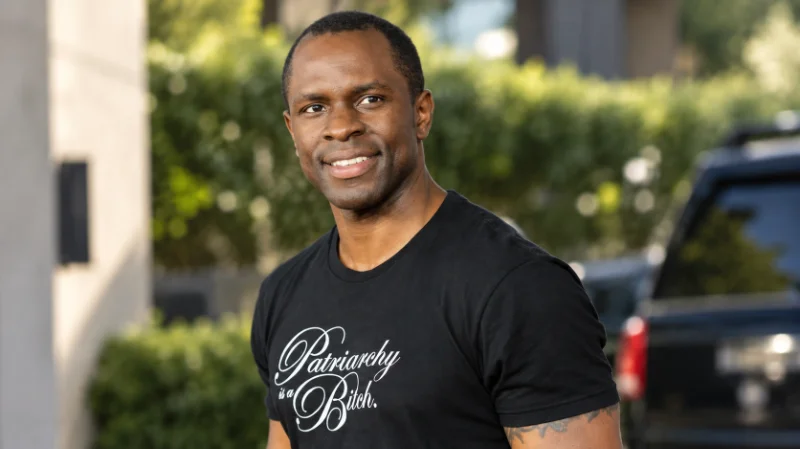
In 2007, Akinnagbe appeared in The Savages alongside Philip Seymour Hoffman and Laura Linney, an Oscar-nominated film that ran on a modest $9 million budget. Two years later he joined the remake of The Taking of Pelham 123 with Denzel Washington and John Travolta, followed by Edge of Darkness with Mel Gibson and Lottery Ticket in 2010.
His highest-grossing credit by far is Independence Day: Resurgence (2016), in which he played Agent Travis in a film that brought in $389.7 million worldwide. Between those bigger titles, he built a long list of independent film credits, including Home, Big Words, Fort Bliss, Mall, Phantom Halo, and Knucklehead, which he also produced. That produced-and-acted-in credit matters for his income picture, since a producer role can carry a backend or flat fee on top of an acting salary, even on a small-budget project.
More recent work includes Detroit (2017), All the Devil’s Men, The Sun Is Also a Star, Passing (2021), Asphalt City opposite Sean Penn, and Rob Peace, directed by Chiwetel Ejiofor and premiered at Sundance. Asphalt City premiered at Cannes the same year, giving him two festival premieres within a single year, which tends to raise an actor’s asking price for the next round of projects even without a box-office hit attached. He has upcoming roles in A House of Dynamite and Starbright, along with a further project, Dreams of the Moon, currently filming.
Television Roles Beyond The Wire
After The Wire ended, Akinnagbe kept a near-constant presence on television. He played Pastor Isaiah Easton on The Good Wife from 2010 to 2015, appeared as a nurse on Nurse Jackie, and took recurring parts on Damages and Graceland. In 2014, he joined the main cast of 24: Live Another Day as CIA agent Erik Ritter, followed by a recurring role on The Following in 2015.
His two biggest post-Wire television roles came later: Larry Brown on HBO’s The Deuce from 2017 to 2018, and Julian Carson, a special-ops contractor, opposite Jeff Bridges on FX’s The Old Man from 2022 to 2024. He also had recurring stints on Wu-Tang: An American Saga and Power Book II: Ghost, plus guest appearances on shows like Fringe, Elementary, Blue Bloods, Madam Secretary, The Blacklist, and Law & Order: Special Victims Unit across multiple seasons.
That volume of guest and recurring work matters more to a working actor’s finances than any single starring role. Guest spots on established network procedurals typically pay a flat day or weekly rate rather than a series-regular salary, but stacking several of them across a year adds up to a steadier income than waiting for the next lead role to come along.
Stage Work and Writing
Akinnagbe never fully left theater. In 2006, he won an award for his role in Modern Missionary at the NYC Fringe Festival, and in 2010 he starred in a one-man show, The Thin Place, at Seattle’s Intiman Theatre, playing eleven separate characters. In 2018, he took on the role of Tom Robinson in a stage production of To Kill a Mockingbird.
He has also written for The New York Times, publishing one essay about climbing in the Himalayas and another describing the medical procedures he underwent to correct severely flat feet. Neither piece likely added much to his income, but both reinforced his public identity as a writer and not just an actor.
Income Sources
Akinnagbe’s income has come almost entirely from acting rather than endorsements or brand deals. During his years on The Wire, his HBO episodic fee was reported at more than $35,000 per episode. Film paychecks since then have varied with each project’s budget and his billing, from studio supporting roles to lower-budget independent films that likely paid far less than his television work.
Beyond acting, he earns fees from paid speaking engagements. He is represented by Chartwell Speakers and All American Speakers Bureau for corporate events and keynote talks, covering topics that include diversity and inclusion, entrepreneurship, and art. This gives him a second income stream that many working actors at his level don’t have.
Notable Ventures and Assets
In 2012, Akinnagbe founded Liberated People, a social-justice apparel brand that ties a percentage of sales to causes such as the Trayvon Martin Foundation, Planned Parenthood, and Black Women’s Blueprint. He also owns Enitan Vintage, a Brooklyn-based furniture business where he reupholsters antique European pieces using Dutch wax-print fabrics common in West African fashion. The business has been profiled by Architectural Digest and The New York Times, and it gives him a revenue stream independent of acting work, even though he hasn’t disclosed specific figures for either venture.
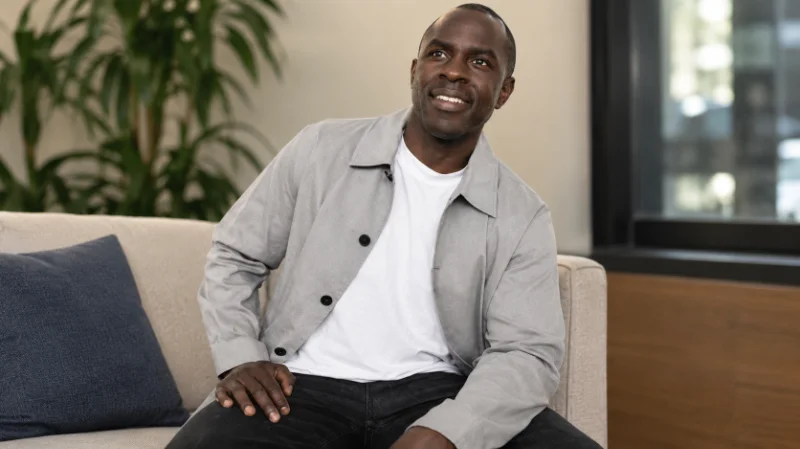
He also serves on the board of the Museum of Contemporary African Diasporan Art (MoCADA), a role tied to his broader interest in art and cultural institutions rather than direct income.
Both businesses share a common thread with his acting choices: a preference for projects with a cultural or social angle over the highest available paycheck. Liberated People was built around causes he cares about rather than pure margin, and Enitan Vintage grew out of a personal interest in furniture restoration rather than a calculated business plan. Neither venture appears to generate anywhere near his acting income, but together they diversify where his money comes from, which matters more for long-term financial stability than for any single year’s earnings.
Estimated Wealth
Public estimates of Akinnagbe’s wealth vary noticeably. Celebrity Net Worth puts the figure at $1 million, while Mabumbe estimates a broader range of $2 million to $3 million, and a Nigerian Queries roundup of Nigerian actors in Hollywood lists him at $3 million. None of these outlets cite audited financial records, since Akinnagbe has never confirmed a number publicly, so the honest answer is that his wealth falls somewhere in that $1 million to $3 million range rather than at one fixed figure.
Reporting also describes him as living a comparatively low-key lifestyle, without the visible spending habits some entertainers use to signal wealth. Most of his estimated worth appears to sit in a combination of acting income accumulated over more than 20 years, plus whatever revenue his furniture and apparel businesses generate.
For context, other Nigerian-descent actors working in Hollywood carry similar or slightly higher estimated figures. Caroline Chikezie, another working character actor known for British and American television, is estimated at around $5 million by the same Nigerian Queries roundup. That places Akinnagbe’s estimated wealth in a comparable range for a steadily working supporting-cast actor rather than a leading box-office draw, which lines up with the type of roles that have made up most of his career.