
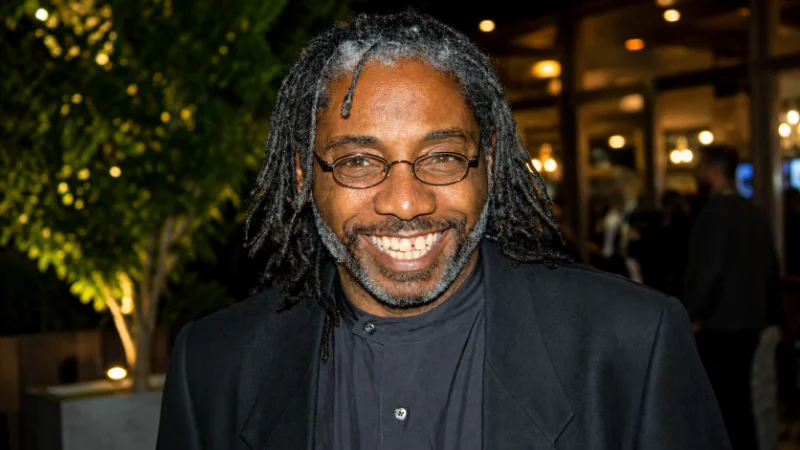
Franklyn Ajaye built his estimated net worth of roughly 3 million to 4 million dollars through five decades of stand-up comedy, film and television acting, and writing for network TV. He is best known to movie audiences as T.C. in the 1976 ensemble comedy Car Wash and to television viewers as Samuel Fields on HBO’s Deadwood.
Franklyn Ajaye Quick Facts
| Detail | Information |
| Full Name | Franklyn Ajaye Jr. |
| Born | May 13, 1949, Brooklyn, New York, U.S. |
| Age | 77 (as of 2026) |
| Occupation | Stand-up comedian, actor, writer |
| Years Active | 1973 to present |
| Nickname | The Jazz Comedian |
| Known For | Car Wash, Convoy, Deadwood, Bridesmaids |
| Net Worth (Est.) | 3 million to 4 million dollars |
Who Is Franklyn Ajaye
Franklyn Ajaye is an American stand-up comedian, actor, and writer whose career runs from early 1970s comedy clubs to present-day film and television work. He earned the nickname “The Jazz Comedian” for a delivery style built on timing, silence, and rhythm rather than punchline volume, a comparison rooted in his early love of jazz music.
His path to comedy was not linear. Ajaye studied at the University of California, Los Angeles, before enrolling at Columbia Law School, and he dropped out of law school to chase stand-up comedy full-time. That decision put him on stages across the United States by the early 1970s, at a time when observational, personality-driven comedy was reshaping the club circuit.
1. Family Background
Ajaye was born in Brooklyn, New York, to a father from Sierra Leone and an American mother, and he grew up in Los Angeles. He often referenced his mixed heritage in his act, joking that the combination made him a true African American. That upbringing between two cultures shaped an outsider’s eye that became a signature of his early material.
2. Education and the Move Away From Law
Ajaye attended the University of California, Los Angeles from 1968 to 1969 before enrolling at Columbia Law School in 1971. He left law school without finishing, a decision he has framed in interviews as a choice between a stable, predictable career and one built on stage time and audience reaction. That switch put him in Los Angeles clubs at the same moment a wave of observational comedians, Pryor and Carlin among them, were redefining what stand-up could sound like.
Stand-Up Comedy Career
Ajaye released his first comedy album in 1973 and followed it with four more over the next several years, including Comedian, I’m a Comedian, Seriously, and Don’t Smoke Dope, Fry Your Hair. Each record leaned on observational bits delivered in his slower, jazz-inflected cadence, a style that stood apart from the faster setup-punchline rhythm common on the club circuit at the time.
He became a fixture of national television in the mid-1970s, making his network debut on The Flip Wilson Show in 1973 and his first appearance on The Tonight Show Starring Johnny Carson the following year. Between 1974 and 1990, Ajaye returned to Carson’s couch across 19 separate episodes, a run that placed him among the more frequently booked comics of that era. He also appeared on Dinah!, The Midnight Special, and other variety programs that defined the period’s comedy exposure.
Ajaye has spoken about receiving unsolicited praise from peers including George Carlin, Robert Klein, Bill Cosby, and Redd Foxx, and he shared the Car Wash cast and comedy circuit with Richard Pryor during the same stretch of his career. In recent years, he has split his time between Los Angeles and Australia, where he still performs occasional live shows and mentors younger comedians, and he returned to the stage in Australia when Jerry Seinfeld toured the country.
1. Documentary Appearances
Ajaye’s standing among his peers led to appearances in two documentaries examining stand-up as a craft: Why We Laugh: Black Comedians on Black Comedy (2009), which traces the history and impact of Black stand-up voices, and I Am Comic, which looks at the professional setbacks and struggles that shape a working comedian’s career. Both projects placed Ajaye’s own story alongside comics he had come up watching and working beside, reinforcing his reputation as a comedian’s comedian rather than strictly a mainstream headliner.
Film and Television Career
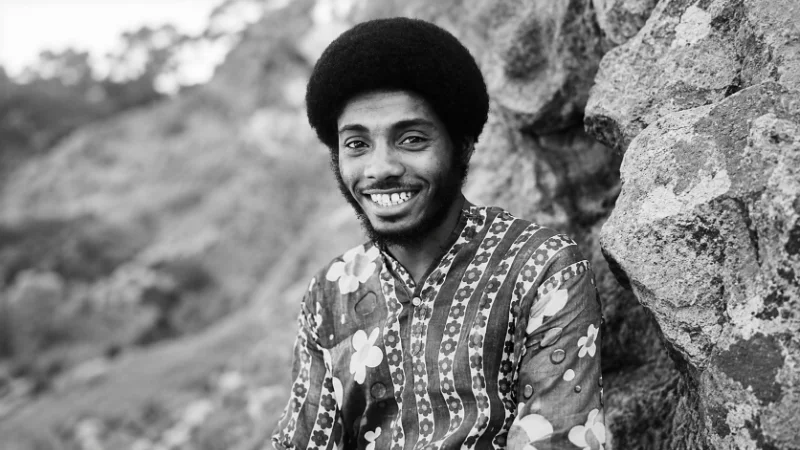
Ajaye’s breakout film role came in 1976 with Car Wash, the ensemble comedy in which he played T.C. Elcott alongside Richard Pryor, George Carlin, Ivan Dixon and the Pointer Sisters. The film became one of the notable Black-focused studio productions of its decade and remains the project most closely tied to his name.
He followed that role with a supporting part in Sam Peckinpah’s Convoy in 1978, then went on to appear in Stir Crazy (1980), the 1980 remake of The Jazz Singer, Hysterical (1982), Get Crazy (1983), Fraternity Vacation (1985), Hollywood Shuffle (1987), The Wrong Guys (1988), The ‘Burbs (1989) alongside Tom Hanks, and American Yakuza (1993). On television, he played a police car thief in a 1976 episode of Barney Miller and later took a recurring role in the family sitcom The Parent ‘Hood.
His most prominent television credit in recent decades is Samuel Fields on HBO’s Deadwood, which he played across the show’s original run from 2005 to 2006 and reprised in Deadwood: The Movie in 2019. He also appeared in the Australian sitcom Utopia and played Lillian’s father in the 2011 comedy Bridesmaids, a role that introduced him to a newer generation of moviegoers.
The Deadwood role marked a shift in how audiences encountered Ajaye. Where his 1970s and 1980s film work leaned on comedic timing, Samuel Fields was a dramatic character: a formerly enslaved man working as a stableman in the Black Hills mining camp. Taking the part showed a willingness to move outside the comedy roles that built his early career, and the 2019 film reprisal, more than a decade after the series ended, reflected how closely fans still associated him with the character.
1. Writing Credits and Emmy Nominations
Beyond performing, Ajaye built a parallel career as a television writer. He received two Emmy nominations for Outstanding Writing in a Variety or Music Program, one for his work on In Living Color and another for Politically Incorrect. He also served as an executive consultant and co-producer on The Parent ‘Hood, work that added a steady production income alongside his acting and stand-up earnings.
Ajaye later turned to long-form writing, authoring Comic Insights: The Art of Standup Comedy, a book examining the craft from a working comedian’s perspective, and he has described work on a second book blending memoir, short fiction, and opinion writing, titled I’m Insane, Notes of a Vagabond Jazz Comedian.

This shift toward writing let Ajaye stay professionally active without the physical demands of constant touring. Guild-scale fees for network writing credits, plus book royalties from Comic Insights, added a steadier income layer that acting and stand-up bookings alone would not have provided, and it let him keep contributing to the comedy world from behind the scenes as his on-stage schedule slowed down.
Franklyn Ajaye Net Worth
Franklyn Ajaye’s net worth is commonly estimated in the 3 million to 4 million dollar range by celebrity finance trackers, built up over a career that spans comedy albums, more than two dozen film and television credits, network writing fees, and book royalties. No court filing, financial disclosure, or interview from Ajaye himself has put an exact figure on his wealth, so any number in circulation should be read as an estimate rather than a confirmed sum.
His income sources break down into a few clear categories. Comedy album sales and club or festival bookings supplied his earliest income starting in 1973. Decades of film and television acting work, including a regular HBO paycheck during his Deadwood years, added a second and likely larger stream. Emmy-nominated writing work on In Living Color and Politically Incorrect brought guild-scale fees on top of his on-camera earnings, and his stand-up memoir and instructional book added a smaller but ongoing royalty stream.
Ajaye has largely stepped back from constant touring in recent years, living part-time in Australia and appearing on stage only occasionally, including a 2025 return when Jerry Seinfeld toured the country and publicly credited Ajaye as one of his own comedy influences.
Personal Life
Ajaye has kept most of his personal life away from interviews, focusing conversations instead on his career and the comedians he worked alongside. What is documented centers on his upbringing between two cultures, his years studying at UCLA and briefly at Columbia Law School, and his decision to leave the legal track behind for comedy. In interviews tied to Car Wash retrospectives, he has spoken candidly about his relationships with contemporaries like Pryor and Carlin and about choosing a quieter life abroad over the touring grind.

Legacy and Influence
Ajaye’s influence shows up most clearly in how other comedians talk about him. British comedian Stewart Lee built a routine around material from Ajaye’s album I’m a Comedian, Seriously for his own television special, and Jerry Seinfeld has named Ajaye alongside Carlin and Pryor as one of his favorite comedians. That kind of peer recognition, arriving decades after his most visible film and TV work, points to a career whose value shows up in reputation as much as in box office numbers.
At 77, Ajaye continues to write new material, mentor younger comedians in Australia, and take occasional stage and screen work, extending a career that has already run more than fifty years across comedy, film, television, and print.
1. Where Franklyn Ajaye Lives Now
Ajaye has been based part-time in Australia for a significant stretch of his later career, a choice he has described as a deliberate step away from the touring lifestyle of hotels, airports, and late-night club sets. He returns to the United States periodically for festival appearances, guest spots and events tied to anniversaries of his earlier film work, including retrospectives built around Car Wash. Even with reduced public appearances, he has kept working behind the scenes, running workshops for newer comedians and continuing to develop written material for his second book.
His comedy albums remain in circulation through streaming and archival reissues, giving new listeners access to a style of delivery that shaped how slower, rhythm-driven stand-up sounds decades later. That continued availability, alongside his acting credits across five decades of film and television, keeps his name in circulation among comedy historians and fans revisiting the 1970s stand-up boom.