
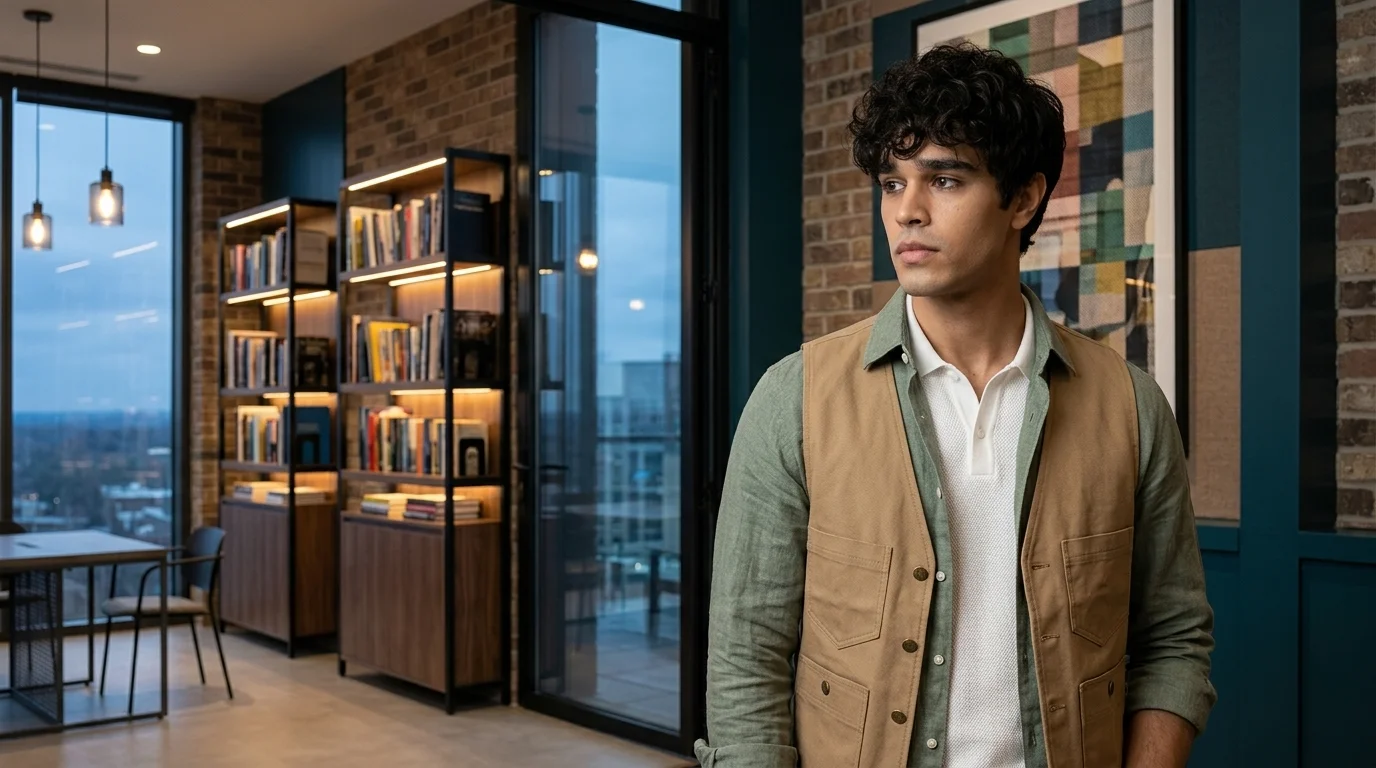
Abubakr Ali is an Egyptian-American actor, writer, and singer who became the first Arab Muslim actor to lead a comic book television adaptation when he was cast as Hunter Rose in Netflix’s Grendel. Since then, his résumé has grown to include a Billy Porter film, a network procedural, a Kathryn Bigelow thriller, and stage work in New York.
His career reflects a pattern that shows up again and again in American entertainment right now: actors from underrepresented backgrounds moving from regional theater and small guest spots into lead roles that studios once reserved for a narrower type of star. Abubakr Ali’s trajectory is a useful case study in what that shift actually looks like, role by role.
Early Life and Move to Pasadena
Abubakr Ali was born in Cairo, Egypt. His family moved to the United States in 2000, and he was raised in Pasadena, California. He has described his father, who died in 2017, as a major influence on his decision to pursue the arts.
Before acting became a career, Ali worked odd jobs, including teaching tennis, while he found his way into performance. He studied at New York University’s Tisch School of the Arts for his undergraduate degree, then went on to earn an MFA from the Yale School of Drama’s acting program, graduating with the class of 2019. Yale’s acting program has produced a run of working actors over the past decade, and Ali’s cohort included future collaborators and peers in New York theater and television.
That combination, a Tisch BFA followed by a Yale MFA, is one of the more traditional training paths in American acting, and it shaped the range Ali has since shown across stage, streaming, and network television.
Yale’s Acting Class of 2019 also produced other names now working steadily in film, television, and theater, and alumni networks from that program continue to overlap on New York stages and in casting rooms years after graduation. Ali has pointed to that period of formal training, rather than a single lucky break, as the foundation for the range he now brings to very different kinds of roles, from villains to romantic leads to procedural cops.
Outside of acting credits, Ali has also identified as a singer and writer, interests that surface in interviews more often than in his screen résumé so far. Actors who train in conservatory-style programs like Yale’s often keep those adjacent skills active even while their public identity centers on film and television work, and Ali’s public profile reflects that same pattern.
Breaking Through With Grendel
In 2021, Netflix announced that Ali would star as Hunter Rose, the title character of Grendel, an adaptation of Matt Wagner’s Dark Horse comic. The casting made him the first Arab Muslim actor to lead a comic book adaptation, a milestone that drew coverage across entertainment outlets covering representation in genre television.
Ali has spoken about the challenge of playing Hunter Rose, describing the character as sociopathic and deeply troubled, a sharp contrast to how cast and crew described Ali himself on set. It was also his first time listed as number one on a call sheet, a position that comes with responsibility for setting the tone of a production, not just delivering a performance.
The series has not yet been released, and its status has shifted since the original announcement, which is common for genre projects that move through multiple stages of network and streaming development. Even without a release date, the casting itself remains a reference point in conversations about who gets cast to lead comic book adaptations.
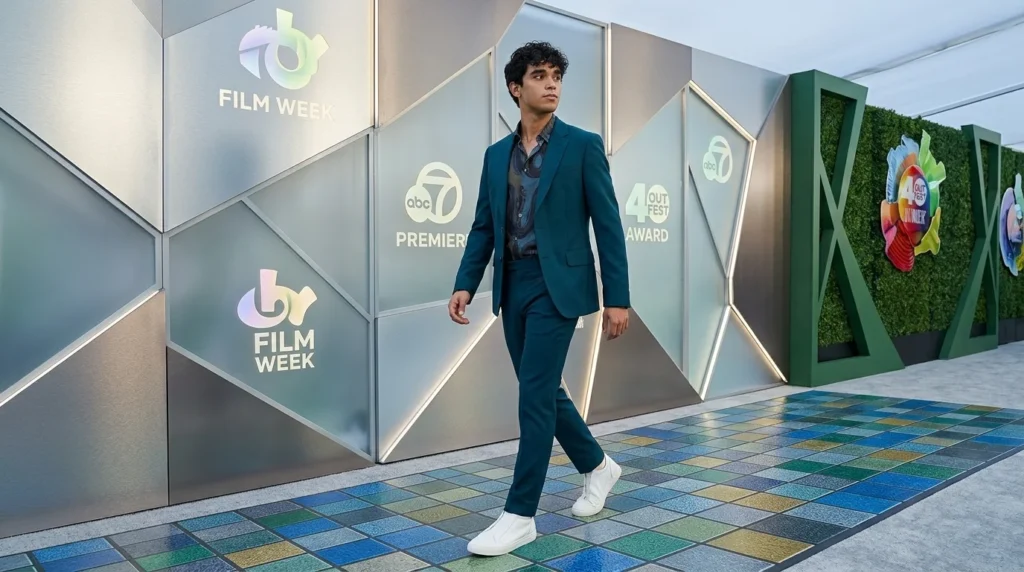
Playing a character as dark as Hunter Rose also gave Ali an early lesson in separating a role from the people making it. He has described crew members repeatedly telling him how surprised they were by the gap between his own personality on set and the character’s cruelty on screen, a comment that came up often enough during production that Ali has referenced it in later interviews as a formative part of learning how to fully inhabit a difficult role without carrying it home at the end of the day.
Anything’s Possible and Early Screen Credits
In 2022, Ali starred opposite Eva Reign in Anything’s Possible, a coming-of-age romantic comedy directed by Billy Porter in his feature directorial debut. Ali played Khal, one half of the film’s central relationship, in a project that MGM’s Orion Pictures and Killer Films backed as a mainstream studio release rather than a niche festival title.
Before that role, Ali had built a body of smaller television credits, including guest appearances on Dig, Katy Keene, Little Voice, and The Walking Dead: World Beyond, along with a recurring part as Sebastian “Bash” Kamal-Stern on Starz’s Power Book II: Ghost between 2020 and 2023. Those credits gave him time on high-volume network and streaming sets before he moved into starring roles, which is a common route for actors who train in theater first and transition to screen work later.
Anything’s Possible itself carried its own significance beyond Ali’s casting. It marked Billy Porter’s first time directing a feature film, and the studio backing behind it, MGM’s Orion Pictures alongside Killer Films, positioned it as a mainstream romantic comedy rather than a smaller festival release. For Ali, stepping into a co-lead role opposite Eva Reign in a studio-backed film meant working at a scale well beyond his earlier guest appearances, and reviewers covering the film’s release frequently singled out the chemistry between the two leads as the reason the story worked as well as it did.
Law & Order: Organized Crime and Television Procedurals
In 2024, Ali joined the cast of Law & Order: Organized Crime as Officer Samir Bashir, appearing across five episodes. Long-running procedurals like the Law & Order franchise remain one of the most consistent sources of steady screen work for actors in the United States, and a multi-episode arc on one of these shows typically signals that a performer has moved past guest-spot status with casting directors.
His character’s arc on the series was a talking point among fans of the franchise, and coverage of the show’s casting decisions noted Ali’s growing profile heading into 2025.

Procedural work like this rarely gets the same attention as a streaming lead role, but it plays a different function in an actor’s career. A five-episode arc on a nationally broadcast series reaches a far broader, more general audience than a niche streaming title, and it keeps an actor visible to casting directors working across genres rather than only within one type of project. For an actor balancing theater, streaming, and studio film work, a network arc like this one helps keep momentum going between larger projects.
A House of Dynamite and Recent Film Work
Ali’s film career expanded further in 2025 with a role as Lieutenant Dan Buck in A House of Dynamite, a thriller that drew attention during awards season conversations. He also has a role in Your Mother Your Mother Your Mother, listed for a 2026 release, and is attached to the project Deep Cuts, which was in production as of mid-2026.
Alongside screen work, Ali has stayed active in New York theater. In early 2025, he starred alongside Mia Barron in Dakar 2000, a new play by Rajiv Joseph staged at Manhattan Theatre Club. He has also been announced as part of the Criminal Queerness Festival lineup at HERE Arts Center, a New York event spotlighting Palestinian, Egyptian, and Syrian-American theater artists, which points to Ali maintaining a presence in stage work even as his film and television credits grow.
That balance between stage and screen is worth noting for anyone tracking his career from outside the New York theater scene. Many actors who move into film and television lead roles quietly step away from stage work once screen schedules get busier. Ali has done the opposite, taking a lead stage role in a new Rajiv Joseph play at Manhattan Theatre Club in early 2025, the same period his film career was expanding with A House of Dynamite, and continuing on to festival theater work in 2026. That pattern suggests theater remains a deliberate part of his career rather than a stage he has already left behind.
Why His Career Matters to U.S. Audiences
For audiences and casting professionals in the United States, Ali’s career maps onto a broader shift in how studios and networks have approached lead casting over the past several years. His casting in Grendel was framed explicitly around representation, being the first Arab Muslim actor cast to headline a comic book adaptation, and outlets covering entertainment diversity treated it as a notable data point rather than a footnote.
At the same time, his subsequent credits, a studio romantic comedy, a network procedural, a Kathryn Bigelow-associated thriller, and recurring New York stage work, show a career built on range rather than a single defining role. That breadth matters for how casting directors and audiences read an actor’s staying power. A performer who can move between a sociopathic antihero, a warm romantic lead, a police officer on a procedural, and a stage role in an original play is demonstrating exactly the kind of versatility that keeps a career going past a single breakout moment.

Casting Society named Ali an Actor of the Month in 2024, an internal industry recognition that reflects how casting professionals, not just critics or fans, have tracked his development. Recognition from casting professionals carries a different weight than press coverage or fan attention, since it comes from the people directly responsible for deciding who gets considered for future roles. Being highlighted by that community suggests Ali’s name is now part of the conversation for a wider range of parts than the type he first became known for.
What to Watch Next
For anyone catching up on his work, Anything’s Possible is the most accessible starting point, given its wide streaming availability. A House of Dynamite offers a look at Ali in a more serious thriller register, while his upcoming appearance in Your Mother Your Mother Your Mother and his continued involvement in Deep Cuts suggest his film slate is only getting busier. Whether Grendel ultimately reaches viewers or not, the casting announcement itself already changed the conversation around who leads comic book adaptations, and Ali’s steady run of credits since then shows that moment was the start of a career rather than a one-time headline.